Thursday, January 17, 2019

Prescient Forebears & groundbreaking texts

  • prescient: having or showing knowledge of events before they take place
  • formation of the field, designers that forged key ideas, thought leaders that influenced the world of contemporary design
Norman Bel Geddes
-industrial/stage designer
-how will design in future differ from design in past?
-futurist
-saw beauty in functionality
-used notion of industrial design & art in the same sentence
book: Horizons
saw a new horizon/age in all diff. types of designs
1932- throes of depression
designed general motors pavilion at 1939 world's fair
stage about car culture
industrial designs:


patriot radio
1939 taxi cab for the future
3 wheels, sideways opening door, windows for views
Herbert Read
-prominent critic
-book: art and industry (1934): juxtaposing art & industry in same sentence; arguments for unadorned, functional products
-industrial design = works of art w utilitarian function
  • both read & bel geddes envisioning new horizon for industrial design
Sheldon & Martha Cheney
-explored aesthetic appeal of streamlined industrial shapes & design
-industrial design= artists' contribution to mass production
book- art and the machine: an account of industrial design in 20th century america
historiography
  • Cheneys evoked Philip Johnson's exhibition at MoMA titled "Machine art":
unprecedented
402 industrialized massed produced objects, in museum setting
considered them objects of art
beauty in design & choice of material, in machine aesthetic
  • josef albers did the photography:


scientific glass for labs
  • ergonomics: human product interaction; the study of people's efficiency in their working environment ex. kitchen products w handles such as can openers
Henry Dreyfuss
-pioneered field of ergonomics
-"if people are made safer, more comfortable...or just plain happier by contact w the product then the designer has succeeded"
book: designing for people
spearheaded ergonomics
-standardized human body to understand roughly how he should create his products to be helpful & comfortable for people


-tough sell to standardize humanity but he was trying to design something where ergonomics came into play; ex. how big, high, far should a desk be?

-his products on diff scales:


 1930s
completely innovative
investigation in ergonomics made him realize earpiece & voice piece should be the same
-designs by him based on ergonomics:
  • designer as experimenter, futurist, forward thinker
Buckminster Fuller
-author, designer, inventor, futurist
-idea that design could benefit humanity
-low point in life --> took stock --> went to figure out what a single individual could do that would benefit humanity --> popularized geodesic dome


sustain weight, stable, provided inexpensive lattice structure
(ex. for military, homeless, etc.)
contributed to marine barracks
-interested in structures in nature (ex. beehives, cocoons) --> starting point for mathematical explorations

-interest in energy efficient structures, inexpensive prefabricated buildings assembled offsite & airlifted to a location
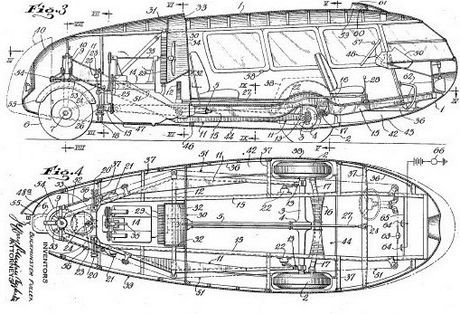
-dymaxium car: streamlining & (fuel) efficiency; 3 wheels for tighter turning radius, 11 seater


-interest in solar & wind energy in 1930s

Rachel Carson
-designer, scientist, marine biologist; huge impact on contemporary design
-considered to spearhead modern environmental movement; sustainability
-famous for campaigning for elimination of DET (killed insects but led to cancer) 
-alerted people to dangers of synthetic pesticides on wildlife & humanity
-called to white house by JFK, he started investigation about it --> regulation of chemical pesticides
-she started in 1960s but not until 1970s did the US establish EPA
book- silent spring (1962)
Victor Papanek
-"the only important thing about design is how it relates to people"
-interested in environment, design, not creating environmental noise, democratization of design
-concern: designer & accountability
-"there are professions more harmful than industrial design but only very few of them"
-calling designer to task for putting so much into the environment (ex. car design), for responsible design
-ultimate job of design is to transform man's environment & tools & in extension, change man himself
-against how we are held hostage by design
-foreshadows contemporary designers who question consumers' wants & needs


-book- design for the real world (1970): couldn't get american publisher at first so first published in sweden; starts the rant right on the cover
-intention of book was a call to task for those who design autos which may be unsafe, creation of landfills, etc.
concerned about inflated ideas in design

Wednesday, January 16, 2019

Reading: Clement Greenberg- Post Painterly Abstraction

malerisch:
-german word used by Heinrich Wölfflin
-translated as "painterly" to talk about the "formal qualities of Baroque art"
-painterly: "blurred, broken, loose definition of color and contour"
-linear: the opposite of painterly (clear, sharp)
  • these terms help us "notice all sorts of continuities  and significant differences, in the art of the present as well as of the past"
  • many artists combine elements of both
Abstract art:
-born amid the painterliness of Analytical Cubism, Leger, Delaunay, and Kandinsky thirty years earlier, but there are all kinds of painterliness"
-1920s & 1930s: abstract art identified by "flat silhouettes and firm contours" (Synthetic Cubism, Mondrian, Bauhaus, Miro)
-"neatly drawn and smoothly painted...clean outlines and flat, clear colors"
  • abstract art --> abstract expressionism seemed "form, all order, all discipline, had been cast off"
Abstract Expressionism:
-abstract & painterly
-"flurry strokes, blotches, trickles of paint"
-a.k.a. "informel" and "action painting"
-derived from Cubism

"Tenth Street Touch" (spread in 1950s)
-"stroke left by a loaded brush or knife frays out, when the stroke is long enough, into streaks, ripples, and specks of paint"
-creates "variations of light and dark by means of which juxtaposed strokes can be graded into one another without abrupt contrasts"
-"automatic solution for one of the crucial technical problems of abstract painting: that of asserting the continuity of the picture plane when working more or less 'in the flat'"
-not necessarily bad but it was negative in its "its standardization, its reduction to a set of mannerisms"

Artists in Exhibition:
-John Ferren: retains "Tenth Street touch," but boxes it "within a large framing area" --> new expressiveness from it
-Sam Francis: "liquefying touch"; "closed and solidly filled paintings of the early 1950's that touch somehow conveys light and air"
-Helen Frankenthaler: "soakings and blottings of paint...open...the picture, and would do so even without the openness of her layout"
-Arthur McKay: "heavily inlaid surfaces relate to Painterly Abstraction in France, but the linear clarity, and plainness, of his design fend off what might be oppressive associations"
-lucidity of color, "stress contrasts of pure hue rather than contrasts of light and dark"
  • "clarity and openness...are relative qualities of art...belong to the physical aspects of painting"
  • reaction against Abstract expressionism: pop art

Review of 20th century Modernism

  • modernism: mid 19th cent. up until 1950s-1960s
The judgement of paris
Marcantonio Raimondi (after Raphael)
1510-20
paris- stole helen & instigated trojan war
paris sitting in judgement at left,
handing golden apple to whoever is the most beautiful in the world
(athena, hera, aphrodite)
^parallel to edouard manet's luncheon in the grass; reinterpreting poses from judgement of paris
-extremely unacademic, acknowledging the flat surface
le dejeuner sur l'herbe (luncheon on the grass)- manet
1863
modernist medium specificity
deliberately problematic/unresolved
putting figures together of relations of non-relations
woman in back is too large for her position, closeness of hands
flatness to woman's flesh, blindingly white
brushstrokes not well integrated
sketchiness in landscape
shatters sense of separateness
weird bc naked woman isn't allegorical, just an every day woman
shown in the salon of the refused
sabotaged harmonizing values & clear unambiguous hierarchies
of classical renaissance order
olympia- manet
1863
prostitute- outcast
stark flatness, blinding white highlighted by black outlines
lack of subtley
almost no chiascurro
flatness relates to print culture/illustration
cat at her feet instead of usual dog
flower in her hair = erotic
ribbon around her neck = presenting her body as a gift
african attendant = racist critiques
suggests she is a courtesan (escort, high class) -->
offensive to salon viewer; disguises class difference from clients,
pretending to be part of a higher class
unsubmissive & particular gaze
-very direct stare, feels as if she is looking at you (individually); stiffer figure; intentionally flat
-used preordained, established themes & putting his own touches on them but still appears to be a stark break w tradition, highlighting the choices that he gets to make
-idiosyncratic approach 
COMPARED TO:
venus of urbino- titian
1538
-softer; different gaze; feels as if you are allowed to look
  • Manet opens up a doorway for impressionist painting
Impressionism
-starting to focus on brushstrokes & mark-making; materiality
-breaking picture plane, acknowledging flatness 
-en plein air
impression: sunrise- claude monet
1872, oil on canvas
en plein air, no preliminary sketch
short brushstrokes of pure color
smallness is emblematic of impressionist movement
absence of contour line & chiascurro
all light & darks given colors
apparent brushwork
no lines & delineation of perspective
Post-Modernism
mahana no atua (day of the gods)- gauguin
1894
bottom register colorful & abstract
tertiary colors
mysterious, allegory?
hidden narrative
arbitrary & symbolic colors
the large bathers- cezanne
1906
not well rendered, proportions are off, one plane
unfinished, a lot of bare canvas showing through
a lot of blue
nude women by body of water
trees form triangle, pyramid composition
framing tells you what to look at, move focus
figures are part of frame but there's not much being framed in middle
highlighting geometry inherent to the canvas = flatten canvas more
not much attempt at atmospheric perspective
blue of the water invades figures & goes into the sky
proto-cubist composition, shifting perspectives
makes you think about figure painting, where the figure isn't important
  • Greenberg's take on modernism: each material reflecting its true essence; painting as most true/perfect artwork
composition VII- kandinsky 1913
spiritual & musical interests to create non-objective, abstract art
pure line, pure color
attach symbolic meaning to colors & specific forms
borrows language of music
categorizing color:
-local
-perceptual
-arbitrary
-symbolic
composition w large red plane, yellow, black, grey, & blue- mondrian 1921
balance
prevents evocation of depth
reduced palette: primary & neutral colors
irregularly organized grid
equilibrium
lose sense of spacial recession
-acknowledges what it is: flat, paint

Greenburg on avant-garde:
-first generation/point able to look backward & understand their place
-avant-garde coming from the rich, from the industrial, increase in education
-people/artists who recognize place in history & creating something that forces consideration & a different sort of viewing/literacy
-avant-garde: room for interpretation
-kitsch: trite reproduction, uncomplicated & unchallenging

Supremitism
black square- kazimir malevich 1915
becomes cracked/faded
arrive at monochrome, most simple
0 degree of culture
purely man-made form
modern art is crafted image
formalist bent (greenberg)
intellectual rigor marries w aesthetic appreciation through essential forms
no pretense of illusionism
-modernism's belief in progress, universality --> anyone can see it & understand it
0.10 exhibition in petrograd including kazimir malevich's black square 1915
historical context:
why is it hung in the upper corner?
(religous context) God said no representational images --> focus on geometry
debate in eastern orthodox religions about representational images
idea: not making a representation of something, it IS that something
ex. "that's not a painting of jesus, that IS jesus"
icons are hung in top corner in house
the fountain- duchamp 1917
"this is art bc i say it is so"
turned toilet on side, signed "r mutt"
seen as ugly, crude, lewd, lacked recognizable artistry
bc he didn't actually make the object himself
work HAD to be submitted but they hated it
submitted into exhibition that he's on the committee of
to test limits & power/taste of institution
full fathom five- pollock, 1947
removed tool that separates him from the paint-
removed brush & puts paint on canvas, working from floor
the paint is just paint; referred to for materiality
anyone can understand it bc it is what it is
big step forward in avant-garde
lavender mist (number 1)- jackson pollock, 1950
1950, oil, enamel, aluminum paint on canvas
pure abstraction
emphasizes creative process
rhythmic drips, splatters, dribbles of paint
gestural abstraction
87x118- moving towards mural size scale, stand in front
can't really see the edges, can't consume it all at once
"all over" painting
chief- franz kline
oil on canvas, 1950
paint then projection- blow up smaller painting
a painting of a painting
black reflection- franz kline
1956
oil and pasted paper on paper
greenberg sees this as genuine & honest but the style being copied after as not
july 4th- willem de kooning
  • Greenberg: sees manet as beginning
-this is how we got where we are

-it's not kitsch, can't be manipulated by tyrant
-avant garde painting makes us think & reaffirm ourselves as individuals
-flattening painting, acknowledging that it's paint on a canvas

SHIFT IN MODERNISM: focus on the relationship of the art to us as viewers
(made separately/diff locations but similar bc of flatness & references to figures, focus on picture/glass plane):

the large bathers- cezanne
88x99 inches
1898-1905
not well rendered, proportions are off, one plane
unfinished, a lot of bare canvas showing through
a lot of blue
nude women by body of water
trees form triangle, pyramid composition
framing tells you what to look at, move focus
figures are part of frame but there's not much being framed in middle
highlighting geometry inherent to the canvas = flatten canvas more
not much attempt at atmospheric perspective
blue of the water invades figures & goes into the sky
proto-cubist composition, shifting perspectives
makes you think about figure painting, where the figure isn't important
the bride stripped bare by her bachelors, even- duchamp 1915-1923
cracks on the way to an exhibition
oil, varnish lead wire and dust on two glass panes 109x69
he thinks of it as figure painting (bride, other people)
chocolate grinder (rounder object) = bachelors
bride at top
goes against removing references/content & has complicated objects representing references
  • has other work called bachelor grinds his own chocolate (masturbates)
wedge of chastity- duchamp
1956/63, bronze & dental plastic
gift to wife when they got married, consumed by an individual only (wife)
evocative, dental plastic reminds you of the body
  • made other sexual objects called objects of desire
etant donnes- duchamp 1946-1966
donated to museum, tucked in corner
doorway leading into a room, look through door
you're looking through the holes but other people are looking at you looking into the holes
becoming extremely aware of not only looking but of people looking at us looking
art = relationship of maker, object, viewer; this put to emphasis on the viewer
WHAT YOU SEE ON OTHER SIDE OF DOOR:
see a weird diorama w a nude body (cast figure), lantern, waterfall
cadaver(?), can't see a head, waterfall lets you know that things are moving in time

Reading: Walter Benjamin's The Work Of Art In The Age Of Mechanical Reproduction

  • "'innovations to transform the entire technique of the arts'"
  • "with the woodcut graphic art became mechanically reproducible"
  • etching & engraving --> lithography --> photography
  • "reproduction of a work of art is lacking in one element: its presence in time and space, its unique existence at the place where it happens to be"
  • aura: "unique phenomenon of a distance"
-"urge grows stronger to get hold of an object at very close range by way of its likeness, its reproduction"
-"uniqueness of a work of art is inseparable from its being imbedded in the fabric of tradition"
-"existence of the work of art with reference to its aura is never entirely separated
from its ritual function"
-"value of the 'authentic' work of art has its basis in ritual, the location of its original use value"
  • formation of the idea of "pure art": "denied any social function of art" & "any categorizing by subject matter"
  • cult value VS. exhibition value
-something made for the spirits & less for others to see; in the present: remain hidden
-"work of art in prehistoric times...instrument of magic... later... to be recognized as a work of art"
-today, "emphasis on its exhibition value...art becomes a creation with entirely new functions"
-"in photography, exhibition value begins to displace cult value"
-cult value "retires into...human countenance" (portrait photography)
  • human countenance: human behavior
  • "age of mechanical reproduction separated art from its basis in cult"
Film:
-in person, actors can adjust performances according to audience
-on camera, the cameraman controls the angles & what we see
-we become a critic bc we simply are watching & cannot interact
-on film, the actor loses his aura bc aura is tied to his presence & he is not in front of you
-cult of the movie star, fostered by the money of the film industry, preserves not the unique aura of the person but the “spell of the personality... the phone spell of a commodity"
-"with the close-up, space expands; with slow motion, movement is extended"
-"camera intervenes with the resources of its lowerings and liftings, its interruptions and isolations, its extensions and accelerations, its enlargements and reductions"
-"camera introduces us to unconscious optics as does psychoanalysis to unconscious impulses"
-scenes keep changing unlike paintings that stay the same & give you time to think about them. w scenes constantly changing, you already see what's going to happen next
-Duhamel: movies are a "pasttime for helots, a diversion for uneducated...spectable which requires no concentration and presupposes no intelligence... awakens no hope other than the ridiculous one of someday becoming a 'star' in Los Angeles"
-"putting the public in the position of the critic"
-"movies...requires no attention"
-"public is an examiner, but an absent-minded one"
  • Extension of the press:"at any moment the reader is ready to turn into a writer"
  • "mechanical reproduction of art changes the reaction of the masses"
  • progressive reaction: "direct, intimate fusion of visual and emotional enjoyment with the orientation of the expert"
  • crisis of painting: "no position to present an object for simultaneous collective experience"
  • Psychopathology of Everyday Life: "made analyzable things which had heretofore floated along unnoticed in the broad stream of perception"
Dadaists:
-"attached much less importance to the sales value of their work than to its usefulness for contemplative immersion"
-"intended and achieved... relentless destruction of the aura of their creations... branded as reproductions with the very means of production"
-"decline of middle-class society, contemplation became a school of asocial behavior; it was countered by distraction as a variant of social conduct"
-"outrage the public"
-"it the spectator like a bullet, it happened to him, thus acquiring a tactile quality"

Architecture:
-"human need for shelter is lasting"
-"buildings are appropriated in a twofold manner: by use and by perception- or rather, by touch and sight"
____________________________
Class discussion:
-Benjamin died young & in Europe w untranslated texts so not until more recently read
-inauthentic relationship to see art on a screen or not in person, Benjamin finds that liberating; his understanding of a piece is just as valid as the original artists' understanding
-agency is lost but we're a shifting world; not universal, dependent on what time we look things at
-things visible to us that aren't to people back then
-Greenberg, however, believes in the universal
-every act of civilization is an act of barbarism; to include, there must be an exclusion